Carrier: Hybrid RTS and Vehicle Combat Across an Archipelago
Carrier Command, from Realtime Games Software Ltd., puts you in command of a robotic aircraft carrier. It combines high-level strategic planning with direct first-person control, letting you manage the ACC Epsilon, launch Manta fighters and Walrus tanks, and switch between map and cockpit views. Notable features include a filled-polygon real-time 3D engine, a 64-island archipelago, and resource management. Retro strategy and simulation fans will value its historical significance and flexible play options.
What kind of game is Carrier? A hybrid RTS and vehicle simulation
The game pairs map-level conquest with hands-on vehicle control, centering gameplay on command of the ACC Epsilon across a 64-island archipelago. Players balance resource placement, industry and defense islands, repairs, and fleet launches. Core loop examples include:
- Strategic planning to capture and develop islands
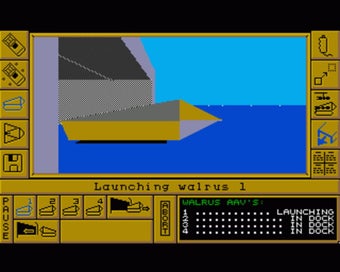
- Tactical assaults using Manta aircraft and Walrus tanks
- Carrier management of repairs and deployments
Does it have a multiplayer mode? Single-player rivalry against an AI carrier
The title ships as a single-player experience with two main starts: Action Game, which begins with a well-equipped carrier for immediate combat, and Strategy Game, which requires long-term resource planning. A computerized enemy carrier actively contests islands and engages your forces, so the challenge comes from AI opposition rather than human opponents. Gameplay emphasizes planning and pacing over networked matches.
What does the game look and sound like? Distinctive period 3D visuals and functional presentation
Visual identity rests on a filled-polygon, real-time 3D engine that created a persistent environment uncommon at the time. The developer's technical focus shows in how map and first-person views switch without interruption, preserving situational awareness as you change roles. Interface design follows simulation-era conventions rather than modern HUD expectations, so players encounter a historical presentation rather than contemporary polish.
Is it hard to get started? Steep learning curve but strong replay value for patient players
User reports note a steep learning curve typical of classic simulations, which reflects layered systems such as resources, industry placement, and repair management. Replayability comes from open-ended island capture, the AI's proactive assaults, and the option to concentrate on strategy or direct control. The result rewards players who invest time in mastering the dual roles and experimenting with different approaches.
In summary, Carrier is a historical pick for patient retro strategists
In summary, Carrier suits players who prize legacy design and deliberate, system-focused single-player challenges more than modern conveniences. The modern digital re-release does not list native macOS support, which is a practical consideration for Mac players seeking straightforward installation. For those who accept older interfaces and a learning curve, the title offers a distinct, historically important experience.